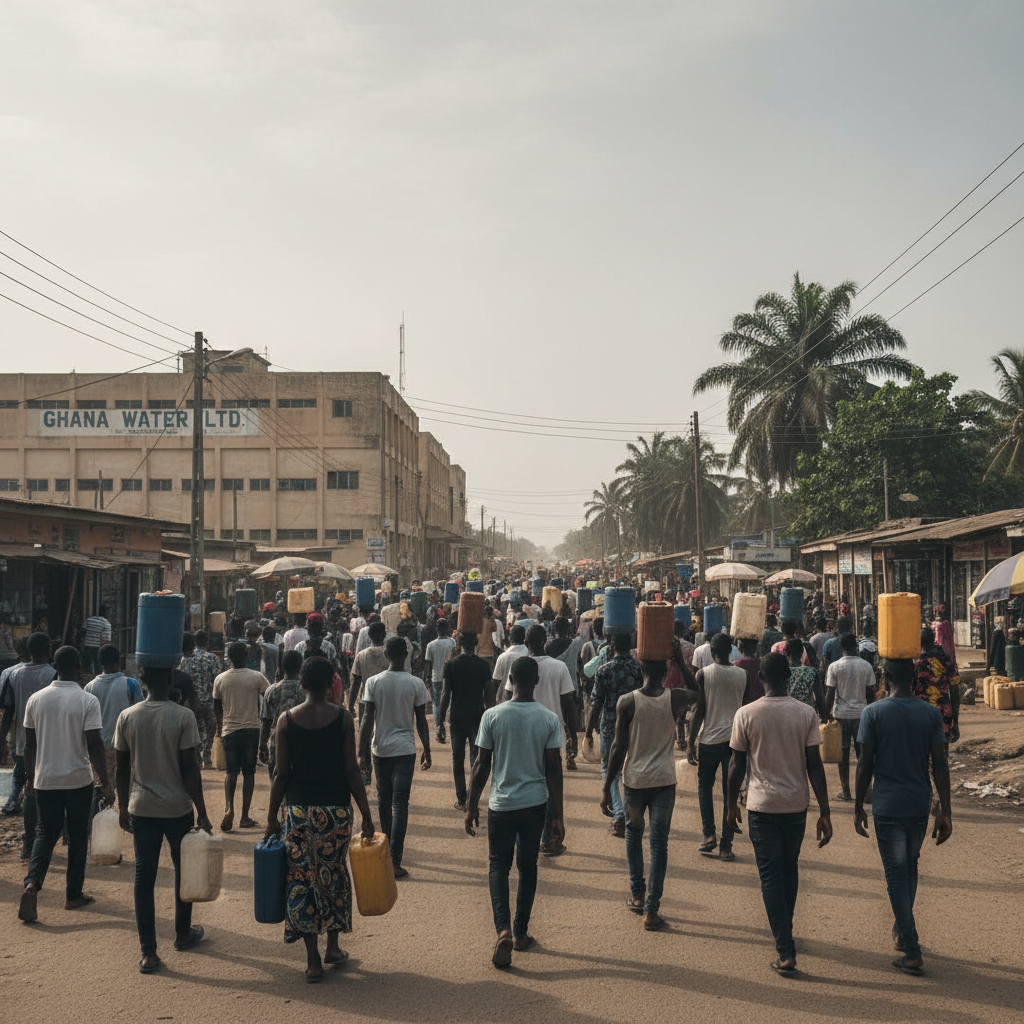
Residents of Tema Community 25 and surrounding areas have threatened to occupy the Ghana Water Limited (GWL) head office. This drastic measure comes after years of persistent water shortages, forcing many households to rely on expensive water tankers and boreholes.
The residents issued their warning following previous unsuccessful visits to GWL's Tema office. They demand urgent intervention from the government and GWL. They stated they would bring their families and mattresses to the company's head office and remain there until water supply is restored. One resident highlighted that the community has faced an unbearable situation since 2022, depending on daily tanker supplies.
This ongoing water crisis in Tema Community 25 reflects broader challenges in urban water infrastructure and service delivery across Ghana. Many rapidly developing areas struggle with inadequate water provision, leading to reliance on alternative, often costly, sources. The situation also raises concerns about public health and economic stability for affected households. The Ghana Water Limited has previously faced similar complaints in other regions, indicating systemic issues in its distribution network and capacity.
“We have given the government two weeks. If we don’t get the water, then we’re going to take action,” a resident warned. They added, “We would come and sleep at the Ghana Water Limited office till we get water.” Another resident, living in the community for eight years, reported investing nearly GHS 30,000 in a reverse osmosis filtration system due to water quality concerns from boreholes. This resident also noted a rental property remained vacant for a year, resulting in lost income.
The planned occupation could disrupt GWL operations and draw significant public attention to the utility's service delivery issues. Decision-makers will likely face pressure to address the residents' demands to prevent prolonged protests. The situation also highlights the financial burden on citizens, with some households spending between GHS 1,000 and GHS 1,200 monthly on water. This expenditure significantly impacts household budgets and local economic activity, as residents divert funds from other essential needs.
The residents also accused GWL of charging estimated bills despite the absence of water in their taps. This practice further exacerbates their financial strain. The lack of reliable water supply also affects critical infrastructure, with four fire hydrants in the community reportedly dry. This poses a severe risk during fire outbreaks, threatening lives and property. The government and GWL must address these concerns promptly to avert a larger crisis and restore public trust.