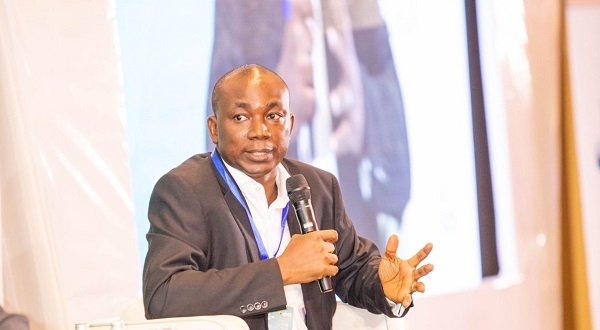
Ghana's potential membership in the BRICS economic bloc will not automatically resolve the nation's economic challenges. Professor Godfred Bokpin, a finance expert at the University of Ghana Business School, issued this caution on Thursday, October 8, 2026.
Professor Bokpin stated that while joining BRICS could open new opportunities and strengthen Ghana's ties with emerging economies, membership alone cannot transform the economy. He stressed that Ghana must prioritize robust domestic reforms and competitive economic management regardless of its international alliances.
This perspective comes as Ghana seeks to navigate a shifting global economic landscape. The country continues to grapple with issues like inflation, currency depreciation, and public debt. Engaging with blocs like BRICS represents an effort to diversify economic partnerships beyond traditional Western-led groupings.
“BRICS is still evolving, even within the original founding members,” Professor Bokpin explained. He added, “There are quite a lot of nuances that would have to be ironed out.” He emphasized that Ghana should not expect immediate economic gains from joining the bloc.
Professor Bokpin supports the government's intention to join BRICS, viewing it as a strategic move in a changing global order. He highlighted the significant economic influence of BRICS, noting its combined Gross Domestic Product (GDP) now surpasses that of the G7 nations. The 11 founding members and 10 partner countries of BRICS account for almost 40 percent of global GDP.
He pointed to long-term projections indicating BRICS countries could increasingly dominate the global economy. By 2050, three out of the top five largest economies globally are projected to be BRICS members. China, for instance, is expected to become the world's largest economy by 2050, followed by the United States.
Looking further ahead to 2075, projections suggest that four of the world’s five largest economies could be BRICS members. Professor Bokpin noted that only one non-BRICS member would remain in the top five by then. However, he cautioned that these projections are not certainties and should be viewed with a critical eye.
Professor Bokpin also cited Nigeria's projected economic rise, driven largely by its private sector and major entrepreneurs. He suggested Ghana is already experiencing the growing influence of emerging economies, particularly through its expanding trade relationship with China. This necessitates closer engagement with BRICS while carefully assessing geopolitical implications.
Ultimately, Professor Bokpin reiterated that BRICS membership is not a substitute for Ghana's own economic homework. The nation must focus on internal policies that foster competitiveness and sustainable growth. Merely joining an international bloc will not provide a quick fix for deep-seated economic challenges.
Ghana's economic future depends on a combination of strategic international partnerships and diligent domestic policy implementation. The government must balance its global aspirations with the imperative for strong internal reforms to achieve lasting prosperity.