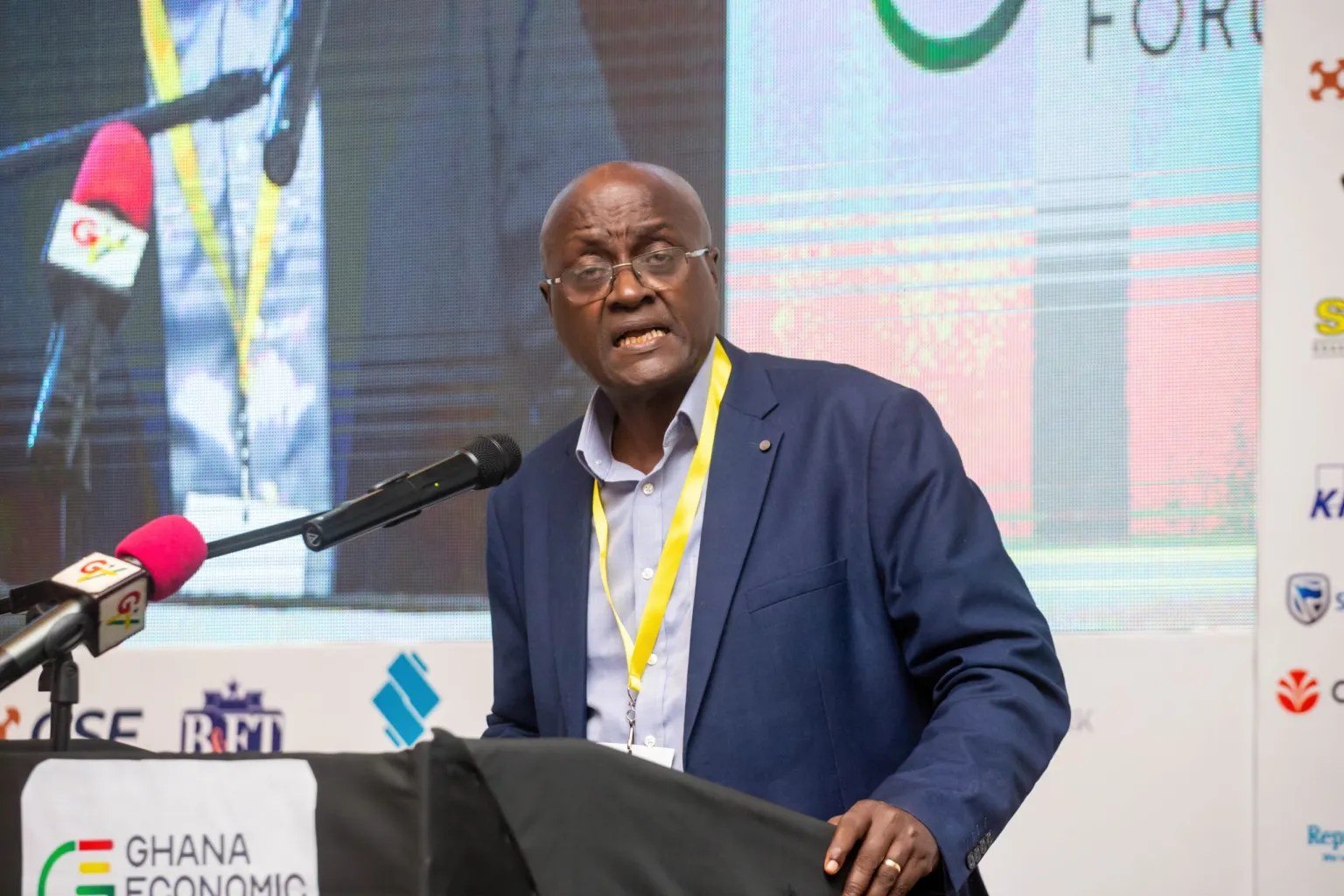
Banking and finance expert Dr. Richmond Akwasi Atuahene has issued a strong warning against Ghana's decision to apply for BRICS membership. He describes the move as a dangerous distraction from the country's severe internal economic challenges. Dr. Atuahene argues that external alliances cannot solve Ghana's fundamental problems.
Dr. Atuahene's analytical paper, titled “Ghana joining the BRICS or Re-orienting Ghana’s Economic Destiny,” asserts that seeking economic salvation in new geopolitical blocs is an illusion. He highlights Ghana's repeated reliance on external remedies, citing 17 visits to the International Monetary Fund since independence. This pattern, he suggests, ignores the nation's self-inflicted internal failures.
This critique comes as Ghana faces persistent economic vulnerabilities despite recent fiscal improvements. The country continues to grapple with a long-standing colonial economic architecture, often called the “Guggisberg economy.” This structure relies heavily on exporting unprocessed raw materials like gold, cocoa beans, and crude oil. Ghana then imports most manufactured goods and basic consumer items, creating a significant trade imbalance.
Dr. Atuahene's analysis directly challenges the government's narrative that BRICS membership represents a revolutionary step towards economic sovereignty. He maintains that simply changing or adding trade partners, such as China, India, or Brazil, will not alter Ghana's fundamental economic flaw. Without building domestic processing capacity, he warns, deeper trade channels with industrial powerhouses could flood Ghanaian markets with cheap imports. This would suffocate nascent local industries and worsen existing trade deficits.
The expert points to Ghana's urgent domestic crises, which he believes are being ignored. A critical issue is the explosive youth joblessness crisis, threatening national stability. Over 1.3 million young Ghanaians aged 15 to 24 are not in education, employment, or training (NEET). Additionally, more than 510,000 graduates enter the labor market annually with limited prospects. This desperation fuels social problems like cybercrime, armed robbery, and political vigilantism.
Ghana also bleeds scarce foreign exchange on essential imports. The country spends up to $500 million annually on rice and another $500 million on poultry. Tomatoes cost $168 million, onions $104 million, and imported used vehicles account for a staggering $620 million to $740 million each year. These figures underscore a reliance on imports that drains national resources.
Furthermore, illegal gold mining, known as galamsey, devastates major river systems like the Pra, Ankobra, Birim, and Densu. This activity contaminates water with toxic mercury and cyanide, destroys cocoa farms, and leaves dangerous open pits. Dr. Atuahene firmly states that BRICS membership offers no solutions for these pressing domestic realities.
He also dismisses the idea that BRICS or its New Development Bank (NDB) will provide easy financial rescues. Ghana faces a crushing debt burden, including $6.4 billion in Eurobond principal and interest payments due between 2027 and 2030. The country also has over GHS 106 billion in domestic debt repayments scheduled for 2027 and 2028. BRICS membership, he argues, does not offer unconditional bailouts or replace the International Monetary Fund's stabilization role.
Aligning with rival geopolitical blocs could also compromise Ghana's non-aligned stance. This might expose local Ghanaian banks to compliance friction and potential Western financial sanctions. Dr. Atuahene also insists that external alliances will not cure Ghana's endemic corruption. The nation loses close to GHS 10 billion annually to corruption, with GHS 5 billion in cash bribes alone in a single year. Joining BRICS, he concludes, merely exports unaddressed governance decay to a new global stage.
Dr. Atuahene's core message is that external economic alliances are merely tools, not cures. He emphasizes that Ghana cannot negotiate its way to prosperity from foreign capitals while its rivers are toxic and its youth are jobless. True economic salvation requires an inward revolution, focusing on dismantling the colonial economic structure. This involves aggressive value addition, local industrialization, and domestic resource mobilization. Domestic reconstruction must be the top priority, with international multi-alignment coming second.