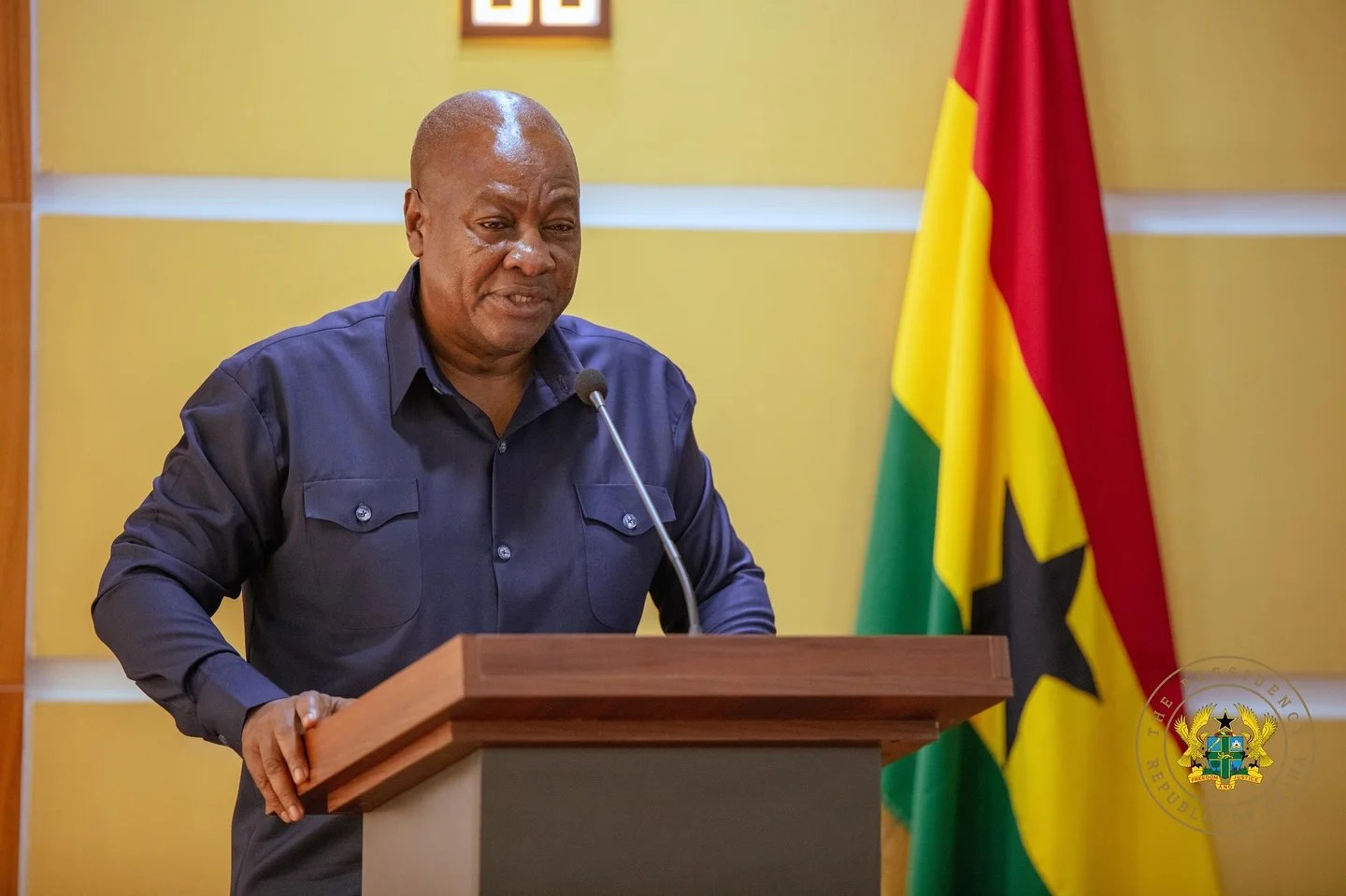
President John Dramani Mahama has announced that the government has ceased competing with the private sector for commercial credit. This policy shift allows Ghanaian businesses to access more affordable financing, supporting expansion and job creation across the country. The President made this declaration during a working visit to Kasapreko Company Limited, a major indigenous manufacturing firm.
This significant change stems from disciplined fiscal management and targeted economic policies under the 'Resetting Ghana Agenda'. These efforts have substantially reduced interest rates and stabilized the national currency. Previously, heavy government borrowing, known as 'crowding out', left little money for private companies. Banks then charged very high interest rates to businesses, sometimes as high as 32 percent, which led to increased consumer prices and inflation.
The government's previous high borrowing meant that when private businesses sought loans, credit was scarce and excessively expensive. This situation stifled business growth and passed high costs onto consumers. The current administration's commitment to fiscal discipline means the government now lives within its means, creating vital space for the private sector to thrive. This approach is crucial for fostering a stable and predictable economic environment, which is essential for long-term business planning and investment.
President Mahama explained, "Before, government was crowding out the private sector because government was taking all the credit. If the private sector went to the banks, there was no credit available, and the interest rates demanded were excessive." He added, "We are exercising fiscal discipline, making sure government lives within its means, and creating space for the private sector to grow." This direct statement underscores the administration's strategic focus on empowering private enterprise.
The impact of these policies is already evident in commercial interest rates. These rates have fallen drastically from previous peaks of around 32 percent. Some business operators can now secure loans at single-digit rates, as low as 9 percent. This reduction in borrowing costs significantly lowers the financial burden on businesses, enabling them to invest more in operations, technology, and human capital. Lower interest rates also make Ghanaian businesses more competitive regionally and internationally.
This policy shift, supported by initiatives like the 24-Hour Economy Initiative and the Accelerated Exports Development Programme, is yielding tangible results. Foreign Direct Investment (FDI) saw a substantial increase, jumping from $624 million in 2024 to $2.62 billion in 2025. This surge indicates growing international confidence in Ghana's economic prospects. The President urged domestic entrepreneurs to fully capitalize on this favorable investment climate, emphasizing that if foreign investors see potential, local businesses should too.
The continued reduction in government borrowing from domestic sources will likely sustain the downward trend in interest rates. This will further enhance the private sector's access to credit and reduce their operational costs. Businesses can expect a more stable and predictable financial environment, encouraging long-term planning and expansion. Policymakers will closely monitor inflation rates and currency stability to ensure these gains are maintained, supporting sustained economic growth and job creation across Ghana.