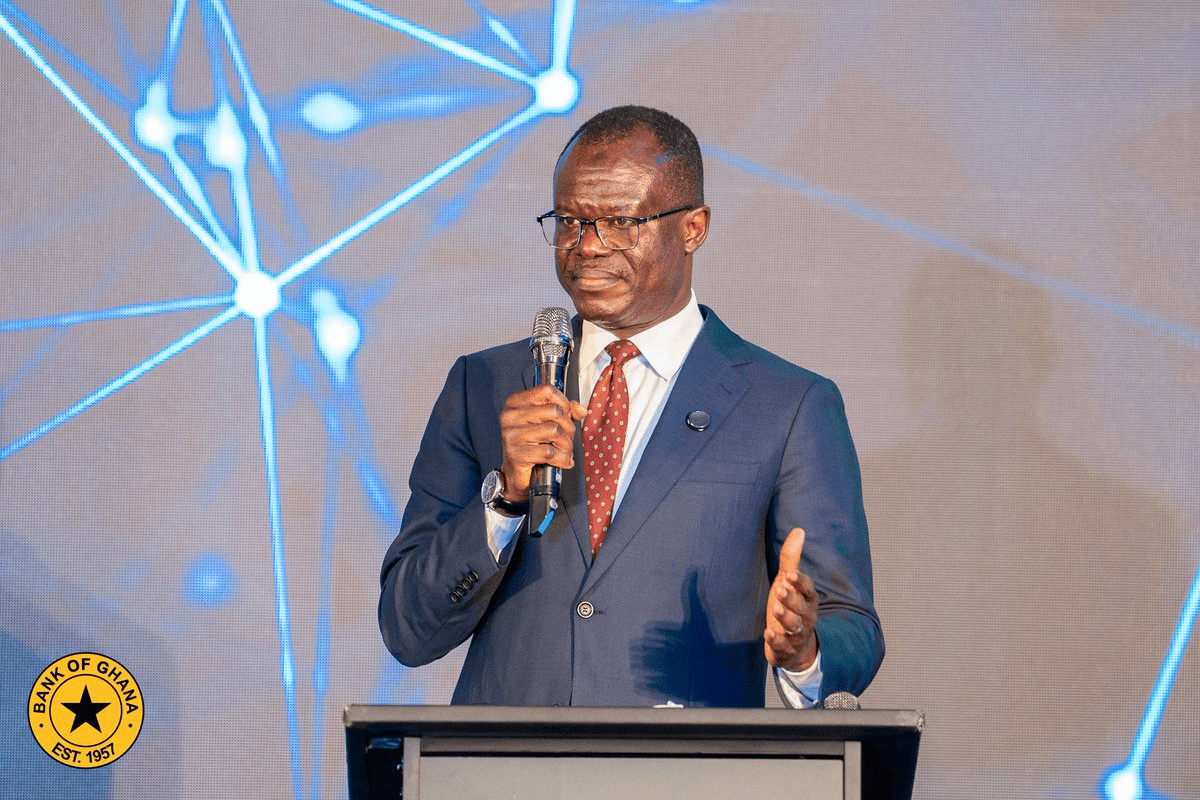
Ghana’s First Deputy Governor of the Bank of Ghana, Dr. Zakari Mumuni, stated that economic stability alone cannot guarantee investment. He emphasized the critical need for well-prepared, commercially viable projects to attract foreign capital. This statement comes as Ghana shows signs of economic recovery.
Dr. Mumuni's comments were made at the High-Level West Africa–Asia Capital Dialogue in Bangkok, Thailand. He highlighted that investors look beyond headline economic indicators when deciding where to commit funds. Issues like regulatory uncertainty, contract enforcement, and foreign exchange risks can deter actual financing. The International Monetary Fund (IMF) recently raised Ghana's 2026 growth forecast to 5.7% from 4.6%. Ghana’s inflation rate stood at 5.2% in September, and the cedi gained against the US dollar in early October.
This perspective fits into Ghana's broader economic narrative of transitioning from stabilization to growth. The country has focused on fiscal consolidation and monetary stability, which are foundational for investor confidence. However, turning this stability into tangible investment in productive sectors remains a key challenge. Previous efforts to attract investment have sometimes faced hurdles in project readiness and risk mitigation. The government aims to boost local production and create jobs through increased foreign direct investment.
“Our responsibility in Africa is to make opportunities more investable,” Dr. Mumuni stated. He added, “Our partners’ responsibility is to assess those opportunities objectively and work with us to develop commercially viable solutions.” This underscores a shared responsibility between African nations and international investors to bridge the investment gap. Expert analysis often points to the need for robust public-private partnerships to de-risk large-scale projects.
Moving forward, Ghana must focus on developing a pipeline of investment-ready projects. This includes thorough feasibility studies, clear risk-sharing arrangements, and appropriate financing structures. Sectors like agro-processing, manufacturing, energy, transport, logistics, digital services, and financial technology hold significant potential. Central banks, including the Bank of Ghana, will continue to support this process by maintaining monetary and financial stability. They also work to strengthen payment systems and improve transparency in foreign exchange markets. The African Continental Free Trade Area (AfCFTA) offers a wider market, but improved transport links and trade facilitation are essential for cross-border investment. Decision-makers will watch for concrete steps taken to prepare these projects and attract the necessary capital. The government's ability to translate economic stability into project-level success will be crucial for sustained growth and job creation. This strategic shift from merely attracting interest to securing actual investment is vital for Ghana's long-term economic prosperity. It requires coordinated efforts from various stakeholders, including government agencies, financial institutions, and the private sector. The dialogue in Bangkok, convened by the ECOWAS Bank for Investment and Development, aimed to strengthen investment links between West Africa and Asia, highlighting the international dimension of this challenge. Ghana's economic trajectory hinges on its capacity to convert promising sectors into bankable projects that can withstand global economic shifts and attract consistent capital inflows.