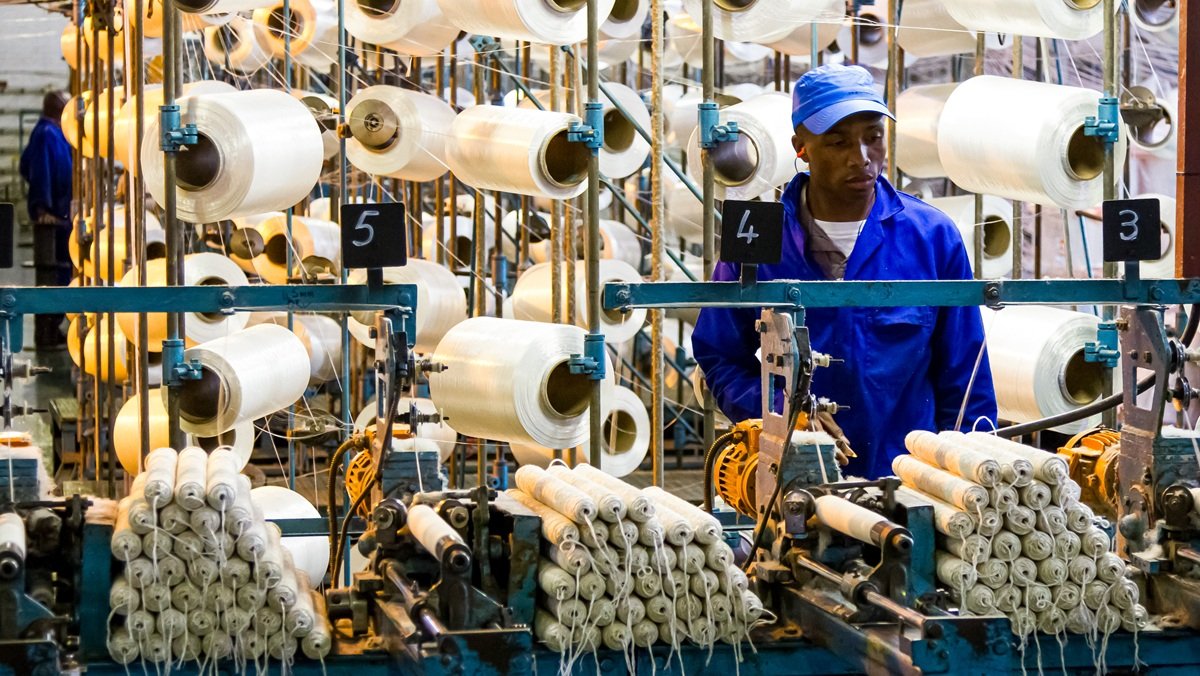
President John Dramani Mahama has unveiled a GHS 140 billion New Economy Programme, committing GHS 28 billion annually over four years. This ambitious initiative aims to inject significant capital into high-impact sectors, positioning Ghana at an industrial crossroads. The programme seeks to translate recent macroeconomic gains, such as falling inflation and currency stability, into tangible real-sector output and new jobs.
The Ministry for Finance will present the framework to Parliament in the 2027 Budget. A core objective is to empower Ghanaian business leaders to build lasting industrial equity. The programme specifically allocates GHS 14 billion ($1 billion) annually to agro-processing enclaves and another GHS 14 billion ($1 billion) to industrial infrastructure and transport links. These investments directly target long-standing manufacturing bottlenecks within the country.
This strategic investment aligns with Ghana’s broader economic agenda to foster industrialisation and reduce import dependency. Previous efforts to stimulate local production have faced challenges, including high capital costs and infrastructure deficits. The New Economy Programme seeks to overcome these by providing litigation-free serviced plots and factory shells, lowering operational entry barriers for local firms. This approach allows businesses to bypass heavy upfront land and utility costs, which have historically hindered growth.
The initiative also leverages existing infrastructure, such as positioning hubs like the 1,238-acre Afienya Industrial Park along the Tema-Mpakadan rail line. This integration aims to improve regional supply chains and expand trade opportunities, particularly under the African Continental Free Trade Area (AfCFTA). Scaling priority sectors like cocoa processing, pharmaceuticals, and garments offers rapid import-substitution capabilities, strengthening the local economy.
Despite its transformative potential, the programme faces significant structural challenges. High domestic capital costs remain a hurdle; local banks still charge double-digit interest rates, while foreign firms often access single-digit international financing. Energy pricing and infrastructure bottlenecks also require sustained focus, as continuous multi-shift operations envisioned under the 24-Hour Economy depend on affordable and reliable power. Furthermore, foreign competitors possess a sunk-cost advantage through established global supply chains and automated technology, which local Micro, Small, and Medium Enterprises (MSMEs) initially struggle to match.
A critical concern is the risk of foreign domination, where state-led industrial drives could become foreign enclaves. Without deliberate policy interventions, overseas firms might own the equity and repatriate profits, undermining the programme's goal of domestic wealth creation. While Foreign Direct Investment (FDI) remains vital, reaching $2.62 billion in 2025, the primary mandate of the New Economy must be local capital accumulation.
To secure indigenous ownership, the Ministry of Trade, Agribusiness and Industry and the Ghana Free Zones Authority must enforce joint-venture frameworks. These frameworks should encourage foreign investors to partner with local firms, ensuring shared ownership and technology transfer. Establishing dedicated credit guarantee funds will also de-risk commercial loans for domestic enterprises moving into the new industrial enclaves. State-subsidized technical training will lower onboarding costs for expanding factories, while strict local content procurement quotas must guarantee public sector supply contracts for Ghanaian-owned manufacturers. By pairing state investment with robust local safeguards, Ghana can ensure domestic capital remains central to its economic transformation and industrial future.