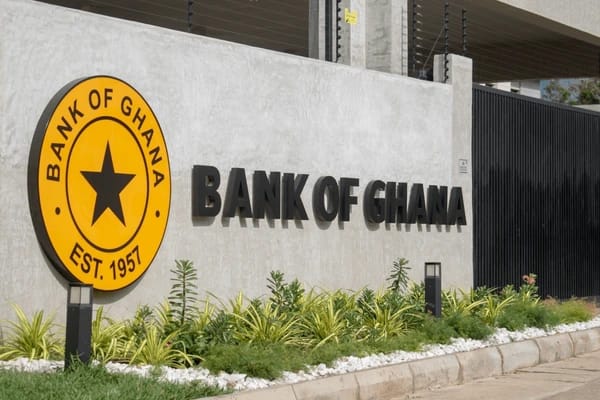
Ghana's Monetary Policy Rate (MPR) dropped to 14.0% by August 2026. This represents a significant 11 percentage point reduction from 25.0% recorded in August 2025.
This substantial decline in the policy rate reflects an expansionary monetary policy environment. The Bank of Ghana (BoG) implemented these cuts in response to easing inflationary pressures and improved macroeconomic conditions. The central bank's actions aim to stimulate economic activity by making borrowing cheaper for businesses and individuals.
This development fits into Ghana's broader economic narrative of battling high inflation and stabilizing its currency. The country has been working to restore fiscal discipline and attract investor confidence. Lower interest rates can reduce the government's borrowing costs and encourage private sector investment. This trend follows a period of aggressive rate hikes designed to curb soaring inflation, which peaked in late 2022 and early 2023.
According to the Bank of Ghana, the reduction in the policy rate by 11 percentage points reflects cumulative monetary easing. This easing was undertaken in response to the moderation in inflation during the review period. Improvements in macroeconomic fundamentals also supported this decision, as stated by the central bank.
The central bank's move is expected to further support economic recovery and growth. Businesses will likely find it cheaper to borrow, potentially leading to increased investment and job creation. Policymakers will closely monitor inflation trends and the stability of the Ghana cedi. The government's efforts to reduce domestic financing costs will also be a key area to watch.
Market interest rates also saw significant declines, reinforcing the easing monetary policy stance. The Interbank Weighted Average Rate (IWAR), which is the average rate at which banks lend to each other, fell to 10.2% in August 2026. This is a sharp drop from 23.3% recorded a year earlier. This reduction indicates that banks are finding it cheaper to borrow from each other, which can translate into lower lending rates for customers.
Similarly, the average lending rate of commercial banks eased to 15.9% by August 2026. This is down from 24.2% in August 2025. This reduction shows a direct pass-through effect from the central bank's policy rate cuts to the rates offered by commercial banks. Lower lending rates are crucial for businesses seeking credit to expand operations and for individuals taking out loans.
Developments in the Treasury bill market were also consistent with the general decline in interest rates. Rates for shorter-term government securities, such as the 91-day, 182-day, and 364-day Treasury bills, declined sharply. The 91-day rate fell to 5.4%, the 182-day rate to 7.3%, and the 364-day rate to 12.2%. These figures compare to 10.3%, 12.3%, and 13.1% respectively, a year earlier. This decline reflects sustained investor demand for short-term government debt. It also indicates improved inflation expectations among investors and ongoing government efforts to reduce domestic borrowing costs.
Despite these widespread declines, real interest rates remained positive during the review period. Real interest rates account for inflation, meaning that the return on investments still outpaced the rate at which prices were rising. This positive real return is important for attracting and retaining investors. However, rates on medium- to long-term government securities, such as 2-year, 3-year, 5-year, 6-year, 7-year, 10-year, 15-year, and 20-year bonds, remained broadly unchanged. This stability was due to limited activity in that segment of the market, suggesting less liquidity or demand for longer-term government debt.
The Bank of Ghana's consistent efforts to manage inflation and stabilize the economy are evident in these interest rate movements. The central bank's forward guidance and data-driven decisions play a critical role in shaping market expectations. Continued improvements in macroeconomic indicators will be essential for sustaining this positive trend. The government's fiscal consolidation efforts, alongside monetary policy, are key to long-term economic stability and growth.