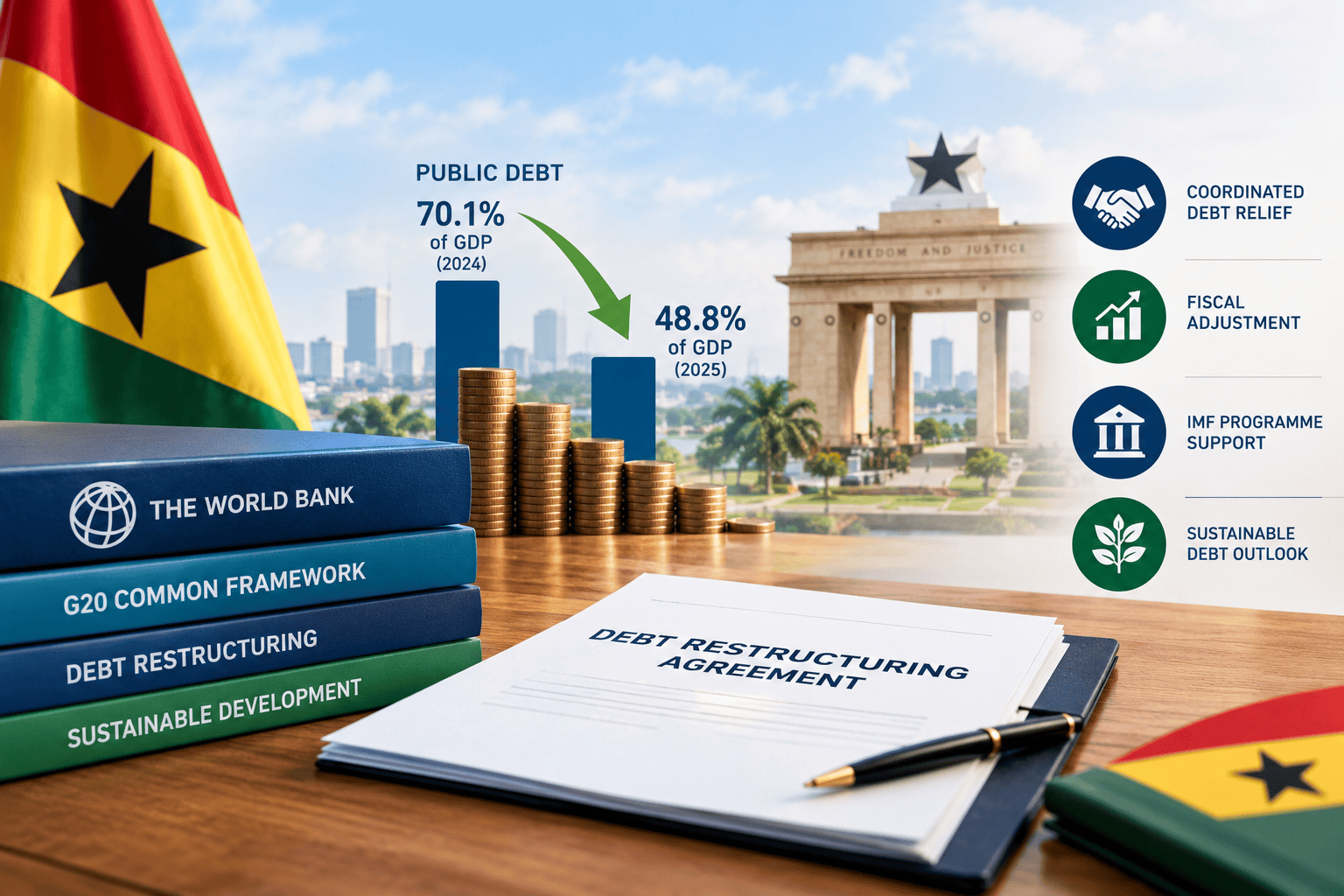
Ghana's public debt decreased significantly to 48.8 percent of Gross Domestic Product (GDP) by the end of 2025. This marks a substantial reduction from 70.1 percent recorded at the close of 2024. The World Bank has highlighted this achievement, positioning Ghana as a leading example of successful debt restructuring under the G20 Common Framework.
This positive shift follows a series of decisive restructuring measures, including a comprehensive debt exchange in July 2026. This exchange successfully retired the nation's remaining outstanding commercial instruments. The World Bank points to Ghana's experience as clear evidence that coordinated debt relief can yield meaningful results when supported by sustained fiscal adjustments.
Ghana's progress is crucial for its economic stability and future growth prospects. The country faced severe debt distress, impacting its ability to fund essential services and development projects. This reduction in debt burden eases pressure on public finances, allowing for potentially greater investment in key sectors. It also signals improved investor confidence in Ghana's economic management.
The World Bank, in its October 2026 Africa Economic Update, specifically named Ghana alongside Zambia as advanced cases. The report stated, "Ghana and Zambia remain the most advanced Common Framework cases to date and provide the clearest evidence that the framework can deliver meaningful debt relief when key enabling conditions are in place." This framework aims to help countries facing debt challenges negotiate relief with their creditors.
Looking ahead, Ghana's external and overall debt distress risk ratings have improved to moderate. This significant re-assessment of its debt sustainability is a positive indicator for the nation's financial health. However, maintaining this recovery requires the government to carefully balance development spending with the need to control borrowing and debt-servicing costs. Decision-makers must remain vigilant to avoid a resurgence of debt pressures.
The journey to this improved fiscal position was complex and lengthy. Ghana spent nearly 30 months moving from its initial agreement with official creditors to a final deal with China. This extended timeline underscores the difficulty of restructuring obligations involving various stakeholders, including governments, bondholders, and commercial lenders.
The World Bank attributes Ghana's progress to three main factors. First, the successful completion of the debt restructuring process was vital. Second, sustained fiscal adjustment under the International Monetary Fund (IMF) programme played a critical role. Third, the improvement in debt sustainability assessments further solidified the positive outlook. These combined efforts have significantly reduced debt pressures and brightened the outlook for public finances.
Debt service payments are now projected to stay below 18 percent of government revenue through 2036. This sustained lower burden on government revenue provides more fiscal space for other priorities. The government must continue implementing prudent economic policies to ensure this trend continues. International financial markets will closely monitor Ghana's adherence to its fiscal commitments.
Ghana's experience offers valuable lessons for other nations grappling with high debt levels. It demonstrates that a coordinated approach, coupled with strong domestic policy reforms, can lead to significant improvements. However, the World Bank cautions that risks persist, meaning continuous effort is needed to safeguard the gains made. The government's ability to attract foreign direct investment and manage inflation will be key indicators of its ongoing success.
The improved fiscal outlook could also positively impact Ghana's credit ratings. A better rating can reduce borrowing costs for the government and Ghanaian businesses. This makes it cheaper to fund projects and expand operations, stimulating economic activity. The long-term stability hinges on maintaining fiscal discipline and fostering sustainable economic growth.