Ghanaian state institutions paid GHS 88.33 million in unearned salaries over a five-year period. This significant financial loss was revealed by an analysis of Auditor-General’s reports on selected public institutions by The Fourth Estate.
The payments went to individuals who were either non-existent, had resigned, retired, or died. These institutions included various Ministries, Departments, Agencies (MDAs), and Metropolitan, Municipal and District Assemblies (MMDAs) across the country. The analysis covered the period from 2021 to 2025, exposing a systemic issue of financial mismanagement.
This widespread problem underscores persistent weaknesses in Ghana's public financial management systems. Such unearned payments drain the public purse, diverting funds that could otherwise support critical development projects or social services. The recurring nature of these findings in Auditor-General's reports highlights a lack of effective controls and accountability within government payroll processes, impacting national budget integrity.
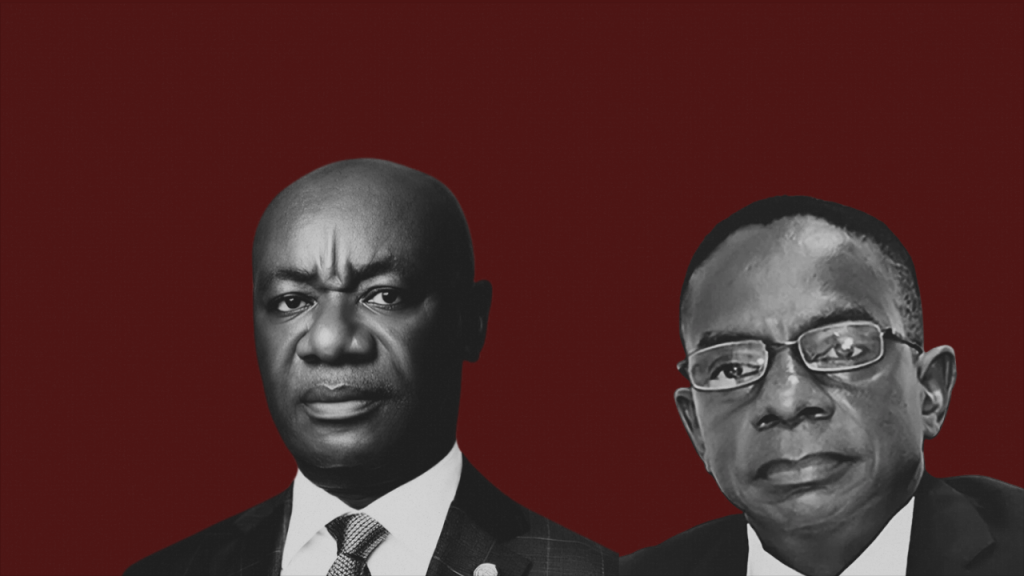
The Controller and Accountant-General, Kwasi Agyei, confirmed a substantial portion of these findings. He stated that GHS 41 million was blown on unearned salaries by MDAs in 2024 alone. Mr. Agyei, appointed in 2024, attributed the problem to payroll validators. He confirmed referring the list of validators to the Office of the Special Prosecutor (OSP) for investigation and recovery of funds.
The implications for public finance are severe, demanding immediate and decisive action. Continued unearned payments erode public trust and strain an already stretched national budget. Decision-makers must strengthen payroll validation processes and enforce strict accountability measures. The OSP's investigation will be crucial in determining culpability and recovering lost funds, potentially leading to prosecutions.
The analysis showed that GHS 84.97 million of the total unearned salaries came from MDAs. The remaining GHS 3.36 million was from MMDAs. Ministries implicated included Health, Finance, Education, Interior, Transport, Local Government, Trade and Industry, Justice, Gender, Children and Social Protection, Food and Agriculture, and Lands and Natural Resources. Other affected agencies included the Atomic Energy Commission, Komfo Anokye Teaching Hospital, Ho Teaching Hospital, Tamale Teaching Hospital, Electoral Commission, Commission on Human Rights and Administrative Justice, Council for Scientific and Industrial Research Institute, Social Welfare, School Feeding Programme, Ghana Police Service, Ghana Education Service, regional and district polyclinics, Judicial Service, and Ghana National Fire Service.
Reasons for these payments included human resource administrators and payroll validators failing to update records. This led to continued payments to accounts of deceased officers. Staff under interdiction also received 100% of their salaries instead of the required 50%. Furthermore, staff absent without leave continued to receive pay. Some employees were placed on higher grades than their qualifications warranted, leading to overpayments.
A financial expert, Major Ashirifie, noted that Ghana possesses sufficient laws and robust control systems. However, he observed that individuals manning these institutions deliberately flout these laws and systems. He questioned the effectiveness of internal auditors in protecting the public purse. The sharp increase in unearned salaries from GHS 9.93 million in 2023 to GHS 41 million in 2024 for MDAs alone is particularly alarming. This surge indicates a worsening trend that requires urgent intervention.
The Controller and Accountant-General emphasized that validators are responsible for verifying payroll entries each month. He stated that if a validator approves payments for a person who has vacated their post, the Controller's office will continue to pay. Therefore, he stressed the need to hold these validators accountable after recoveries are made. This focus on individual responsibility is a critical step towards curbing future losses. The ongoing efforts to recover these funds and punish those responsible are vital for restoring fiscal discipline and public confidence in government institutions.