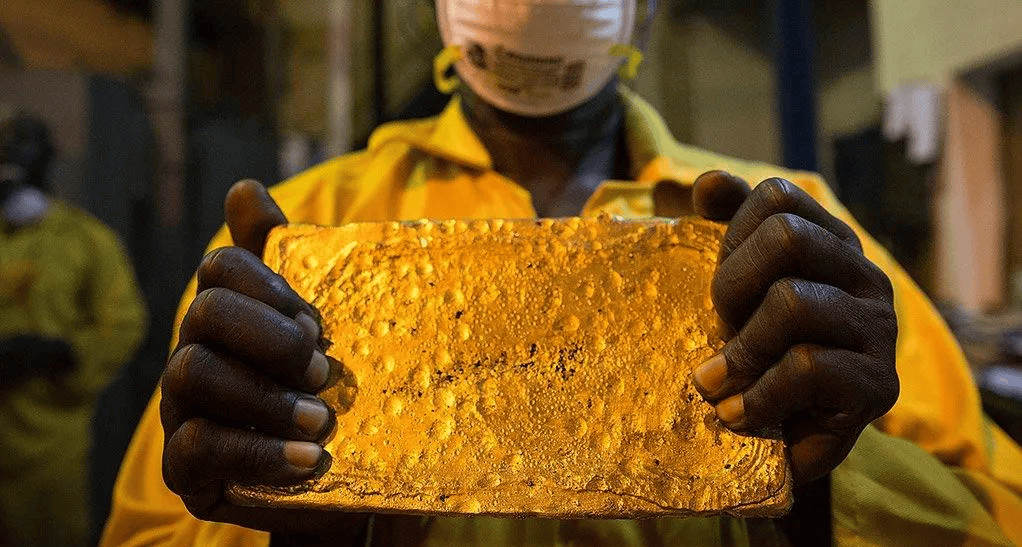
Four international markets absorbed 99.8% of Ghana’s gold bullion exports during the second quarter of 2026. This highlights a significant concentration of the country’s most valuable export commodity. The United Arab Emirates (UAE), Switzerland, India, and South Africa were the dominant destinations for Ghanaian gold between April and June, according to the Ghana Statistical Service (GSS).
Gold bullion generated GHS 78.4 billion during this period. This figure represented 72.3% of Ghana’s total export earnings. The UAE was the largest single destination, taking 41.6% of Ghana’s gold exports. Switzerland followed with 22.3%, India with 22.1%, and South Africa with 13.8%. These four markets left only 0.2% for all other destinations combined.
This concentration is crucial because gold has become increasingly vital to Ghana’s overall export performance. Gold’s share of total exports rose sharply from 57.7% in the first quarter to 72.3% in Q2 2026. This commodity’s earnings increased to GHS 78.4 billion, driving the overall export growth. The narrow market focus also explains shifts in Ghana’s leading export partners.
The Ghana Statistical Service data confirms these trends. The UAE, for example, became Ghana’s largest overall export market. It purchased GHS 32.7 billion worth of Ghanaian goods, representing 30.2% of total exports. India and Switzerland followed as major overall export destinations. South Africa ranked fourth, largely driven by its gold imports from Ghana. Of the GHS 10.8 billion in goods Ghana exported to South Africa, 99.8% was gold.
This reliance on a few markets for gold exports carries both opportunities and risks. While it simplifies logistics and trade relationships, it also exposes Ghana to demand fluctuations or policy changes in these specific countries. Diversifying export destinations could enhance Ghana’s economic resilience. Experts suggest monitoring global gold prices and geopolitical stability in these key markets will be essential for Ghana’s trade outlook.
The GSS data also shows that this concentration is not limited to gold destinations. Ghana’s overall export basket was also heavily concentrated. The top five export products accounted for 89% of total exports in Q2 2026. This sustained influence of gold on Ghana’s external trade provides a major source of earnings. However, it also means sales are concentrated among a very small number of markets and products. Policymakers will need to consider strategies for broader market access and product diversification. This could help mitigate potential vulnerabilities in the long term.